|
|
|

|
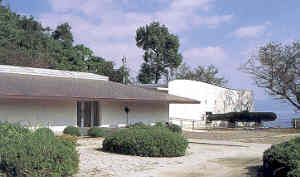
Full-scale model of kaiten
to right of museum building
|
|
|
Kaiten Memorial Museum
The Imperial Japanese Navy approved in February 1944 the development of a new
top-secret weapon called kaiten, a manned torpedo to be
launched from a submarine. In September 1944, a base for kaiten production and
testing was opened on Ōtsushima [1] Island in Tokuyama Bay in Yamaguchi Prefecture.
The first kaiten attack on American ships took place on November 20, 1944, and
kaiten attacks continued until the end of the war. Due to strict military
secrecy surrounding the kaiten program, facts concerning deployment of
manned torpedoes did not get disclosed to the Japanese public until after the
war. The Kaiten Memorial Museum opened in 1968 at the site of the original
kaiten base on Ōtsushima Island, and the museum facilities were renovated in
1998.
Submarines carried between two and six kaiten weapons, which the pilots would enter
from the submarine when ready to launch them against enemy vessels. The kaiten
had the following attributes: 550 horsepower, 14.75 m (45 ft.) length, 1.55 ton
explosive charge on its front, top speed of 30 knots (about 56 km/hour or 35
mph), and range of 23 km (14 miles) at top speed [2].
The pilot sat in the middle of the kaiten and could use a periscope to verify
the location of the target, although this could result in detection. Kaiten
attacks achieved the sinking of only two American vessels with the loss of 162
American lives, in comparison to 106 kaiten pilots who lost their lives,
including 15 killed in training accidents. The kaiten pilots' ages ranged from
17 to 28. In addition to the kaiten pilots, more than 600 men died as eight
Japanese submarines carrying kaiten were sunk by enemy attacks. [3]
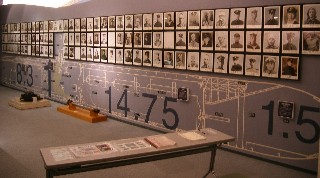
The museum's exhibits are arranged generally in
chronological order, and there are many photographs of the base during the war. The
museum also displays originals or copies of letters, postcards, or other writings of
about 15 kaiten pilots. There are typed copies next to several of them to
allow for easier reading. A relief map of the island and a model of the base
provide the visitor with a visualization of the base's layout and the three increasingly
difficult courses followed by pilots in training. The museum's exhibition room
also has individual photos of kaiten pilots who perished (arranged by date of
death). The exhibits explain that kaiten training took place at three other
bases opened after Ōtsushima Base, including two nearby in Yamaguchi Prefecture
(Hikari and Hirao) and one in Ōita Prefecture (Ōga).
|
|
|
|
|
|
|
On the other side of the island from the museum, visitors
can view the remains of a concrete building where kaiten were launched for
training. One gets there by walking through a tunnel used during the war to move kaiten by
rail from the assembly and repair facility to the launch site. The tunnel now
has several enlarged wartime photos and explanations of kaiten history. There
is a full-scale model of a kaiten in front of the museum building. Next to the
museum stands the Kaiten Monument, which in 1961 replaced the original one built
in December 1945 [4].
A small room near the museum entrance seats about 12-15 people
who can view a 20-minute film entitled Jidai no shōnin (Witness of the
times). The film features four former kaiten pilots [5] who survived the war. They
each give extended comments on their kaiten pilot experiences. The back of
the film room has a plaque dedicated to Katsurō Mōri, who was instrumental in
founding the museum. He began working at Ōtsushima in 1937, when the Type 93
torpedo was launched in testing there. When the war ended, he took many valuable
historical materials and photos from the kaiten base, and he buried them in
Shiga Prefecture so that the American military could not find them. During the
next two decades Mōri visited many bereaved families around the country who had
lost a family member as part of kaiten operations, and he collected many items
from them. These materials from the kaiten base and from bereaved families
became the foundation for the Kaiten Memorial Museum that opened in 1968.
A 30-minute film in Japanese and English gives the history
of the kaiten program. A museum worker will show this film on request in the
meeting room. The reason for the kaiten, in the words of one pilot who
later died in training, is read by the narrator, "There was no other way
but to use this type of weapon to counter imminent defeat. . . . Our fleets
could not go anywhere without being detected by the enemy radar." The film
and museum never give a summary of the military effectiveness of the kaiten
weapon, which resulted in relatively little damage to the American fleet in
comparison to the losses of kaiten pilots and submarines by the Japanese Navy.
However, the film has a man, who trained as a kaiten pilot, explaining that the
kaiten was the "most efficient" weapon, since the manned torpedo was
more successful than the suicide air attacks that only hit one in ten targets.
The confirmed damage to the U.S. fleet of two vessels sunk by kaiten does not support his
optimistic assessment. The film also presents excerpts of kaiten pilot letters, and the
narrator says, "the last things soldiers wrote while on these missions
showed they were at peace with the world."
The newest major exhibit inside the Kaiten Memorial Museum is the kaiten
interior model that was used for
Deguchi no nai umi (Sea without exit), a 2006 film about four kaiten human
torpedo pilots, including a former college baseball pitcher, on a suicide
mission. The model has a diameter of 1.25 m, whereas an actual kaiten had a
diameter of 1 m. The interior model kaiten includes a hatch from the mother
submarine into
the kaiten.
|
|
|
|
|
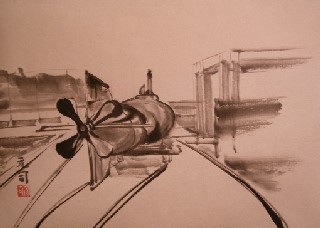
Title: Kaiten on rails to launching site.
This India-oil painting by former kaiten pilot Motoshi Nakashima [6],
who survived the war but is now deceased, is on display at the museum. The
painting shows the remains of the kaiten launching site, which can be viewed
today on the other side of the island from the museum (see photo at bottom of
page).
|
|
|
The kaiten manned torpedoes were part of Japan's Special
Attack Corps, which made suicide attacks on Allied ships. Japanese people do
not use the word "kamikaze" to refer to the kaiten weapon even though
non-Japanese often use this word to refer to any type of suicide attack. The
museum exhibits do not use the word "kamikaze," but the title of the
English version of the museum's film is "World War II, Kamikaze Submarines."
The former museum director explained in 2004 that "manned torpedo" is a more proper
English translation for kaiten than "kamikaze submarine."
The museum can be reached from Tokuyama Station, a
Shinkansen bullet train stop, by walking two minutes to the port and then
taking a 45-minute ferry ride to the island. The museum's exhibits are all in
Japanese. However, in addition to the 30-minute film in English, the
attendant will play a 10-minute English tape on the overhead speakers so that
English-speaking visitors can listen while viewing the exhibits. The tape narrative gives the
general history of the kaiten and does not explain specific exhibits. The
museum store sells an excellent Japanese book by The Mediasion Co. (2006) about
the history of the kaiten. This book has numerous historical photos and details
about the four kaiten bases and the eleven kaiten units that made sorties. The audiovisual room has a library of about ten books on
kaiten and
five books on special attack forces. Museum admission costs 310 yen (about US$3).
The museum does not have a web site, but Shūnan City, which includes Ōtsushima Island, has several web pages about the museum and island with basic
information and several photos.
The following last letters and diary entries were written by Kaiten Special
Attack Corps members who died in special attacks:
Date of Latest Visit: September 6, 2019
Link
Shūnan City information on museum
(Japanese)
Notes
1. The island's name does not have a standard
rendering in English. On my 2006 visit, two signs in Shūnan City, which includes
the island where the museum is located, showed "Ohzushima" rather than
"Ōtsushima." However, the island's name is shown very infrequently
with English letters, so the appearance of "Ohzushima" on these signs
should not be considered as definitive support that "Ōtsushima" should
not be used.
2. Kaiten Kichi 1999, 28-29.
3. Kaiten Kichi 1999, 75; Mediasion 2006, 40, 78;
O'Neill 1999, 200, 214; Warner 1982, 334; Yokota 1962, 266.
4. Kaiten Kenshōkai 1965, 70.
5. These four former kaiten pilots were Toshiharu
Konada, Hideo Kobayashi, Teruyoshi Ishibashi, and Harumi Kawasaki.
6. The pronunciation of this name could not be
verified. His given name could be Motoji. His family name could be Nakajima.
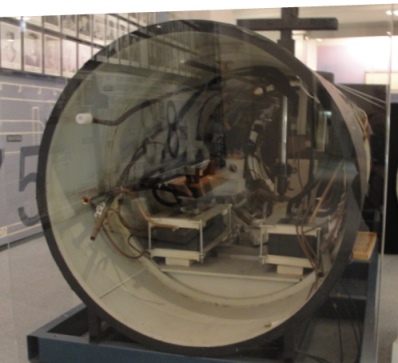
Kaiten interior model used for 2006 movie
Deguchi no nai umi (Sea without exit)
Sources Cited
Kaiten Kenshōkai (Kaiten Memorial Association). 1965. Kaiten.
No place: Kaiten Kenshōkai.
Kaiten Kichi o Hozon Suru Kai (Kaiten Base Preservation
Society). 1999. Kaiten Kinenkan gaiyō, shūzō mokuroku (Kaiten Memorial
Museum summary and collection listing). Tokuyama (now Shūnan), Yamaguchi
Prefecture: Kaiten Kichi o Hozon Suru Kai.
The Mediasion Co. 2006. Ningen gyorai kaiten (Kaiten
human torpedo). Hiroshima: The Mediasion Co.
O'Neill, Richard. 1999. Suicide Squads: The Men and
Machines of World War II Special Operations. Originally published in 1981. London: Salamander Books.
Warner, Denis, Peggy Warner, with
Commander Sadao Seno. 1982. The Sacred Warriors: Japan's Suicide Legions.
New York: Van Nostrand Reinhold.
Yokota, Yutaka, with Joseph P.
Harrington. 1962. Kamikaze Submarine. Originally published as The
Kaiten Weapon. New York: Nordon Publications.
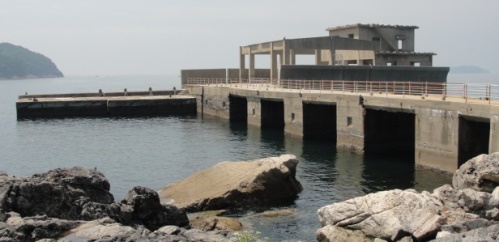
Former kaiten launching site at Ōtsushima
|
