|
|
|

|
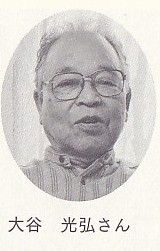
Mitsuhiro Ōtani
|
|
|
Tears of Regret: Senior Officer Warned "Do Not Be Hasty" (Kuyashinamida: "Hayamaru
na" satoshita jōkan)
Researched and written by Shūji Fukano and Fusako Kadota
Pages 282-284 of Tokkō kono chi yori: Kagoshima shutsugeki no kiroku
(Special attacks from this land: Record of Kagoshima sorties)
Minaminippon Shinbunsha, 2016
In the evening of August 13, Flight Petty Officer 2nd Class Mitsuhiro Ōtani
(87 years old, Onomichi City, Hiroshima Prefecture) was on standby at Kushira
Naval Air Base, where he had advanced one week earlier from Tomitaka Naval Air
Base in Miyazaki Prefecture.
Suddenly, the red lamp attached to the wall lit up, and a buzzer sounded. It
was the alert that signaled a special (suicide) attack sortie.
He quickly ran to the shelter where his Type 93 Intermediate Trainer, which
was nicknamed Red Dragonfly (Akatonbo in Japanese) was located. The Intermediate Trainer had
been loaded with a 250-kg bomb and prepared for the sortie. In the middle of the
night the engine's exhaust pipe was furiously spurting out blue and red exhaust
smoke like a demon was baring its fangs.
He went out to the runway as part of a formation of four planes, but
permission to take off was never received. Before very long there came an order
to halt the sortie. "Why was the sortie halted?" He cried tears of regret.
In October 1943, he entered Kagoshima Naval Air Group as a trainee in the
Yokaren (Naval Preparatory Flight Training Program) 13th Kō Class. He learned to
pilot Intermediate Trainers at Tomitaka Naval Air Group and Iwakuni Naval Air Group (Yamaguchi Prefecture). In February
1945, he became a member of the Getsurai Special Attack Unit Kikka Squadron, which
was formed at Iwakuni Naval Air Group.
The youngest pilot was 16 years old. "While almost all trainees volunteered for
special attacks, in reality only some of these could receive planes. I was proud
to get one." It was a Type 93 Intermediate Trainer, which was a biplane with
fabric covering over the wings. Originally it was determined that its
airframe was unsuitable for special attacks, but "since I had known only this plane,
I did not have any complaints."
He was strongly determined. He says, "I had to die for my family and hometown
as someone who was selected." However, he showed tears of regret.
Flight Commander Captain Yūichi [1] Ejima gave the
following advice to Ōtani and others who were crying, "It is not good to be
hasty." Captain Ejima volunteered in 1921. He was a veteran crewman who boasted
over 20 years of flying experience.
"Unlike my comrades and me who wanted to rush out recklessly, Ejima could look
at a battle situation with calmness. Therefore, he indirectly told us to not
waste our lives." Ōtani now thinks so.
There was one other unforgettable sight. A corporal punishment called
batchoku in Japanese was common. It involved hitting someone's rear end with
a club called a "batter." A senior instructor was requested by other petty
officer instructors to intensify these corporal punishments for trainees. At
night he used the club to beat bags with clothing inside. He pretended to be
carrying out batchoku and protected us.
After the war, Ōtani went forward on the path of teaching. "Whatever the
situation, it is important for a person to proceed logically in one's own way by
saying, 'Whatever someone may think, I will think in this way.' " From the
lessons that he learned from his special attack experience, he is convinced that
he dealt with children to show them how to confront this world.
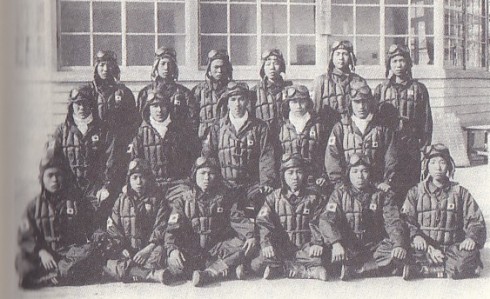
Members of Getsurai Special Attack Unit Kikka Squadron
formed at Iwakuni Naval Air Group. Mitsuhiro Ōtani is
the second person from the right on the front row.
(provided by Ōtani)
Translated by Bill Gordon
September 2026
Note
1. His given name is 友一, which can be read as
Yūichi, Tomokazu, or Tomoichi (rare). The
correct pronunciation is not known.
HOME >
Stories > Tears of Regret: Senior Officer Warned "Do
Not Be Hasty"
|
|
