|
|
|

|
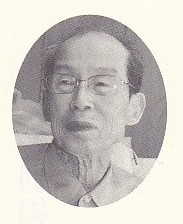
Waichi Kawano, 701st Naval Air Group (90 years old), Anan City,
Tokushima Prefecture
|
|
|
Not Knowing War Lost, Participated in Ugaki Special Attack (Haisen shirazu,
sanka ni "Ugaki tokkō")
Researched and written by Shūji Fukano and Fusako Kadota
Pages 396-399 of Tokkō kono chi yori: Kagoshima shutsugeki no kiroku
(Special attacks from this land: Record of Kagoshima sorties)
Minaminippon Shinbunsha, 2016
At about 5 p.m. on August 15, when four hours or so had passed since the
Emperor's radio broadcast, eleven Suisei (Judy) Carrier Dive Bombers
(Allied code name of Judy) of the 701st Naval Air Group took off and headed
toward Okinawa, which was controlled by the American military.
It was a special (suicide) attack unit under the direct command of Vice
Admiral Matome Ugaki, commanding officer of the 5th Air Fleet. Eight aircraft
did not return from the Navy's final special attack called the "Ugaki Special
Attack."
According to American military records, two aircraft crashed into Okinawa's
Iheya Island. This caused the death of one man and injuries to two men in the
American military, but the outcomes of the remaining six aircraft are not known.
Meanwhile, three aircraft made crash landings in Kagoshima Prefecture, and five
men survived.
There is a photograph that remains showing the situation at the sortie. "I am
the sixth person from the left of the squadron members in the first row lined up
in front of Commanding Officer Ugaki. Behind me is Flight Petty Officer 1st
Class Tamotsu Hidaka, the observer who would fly with me," says former Navy
Flight Petty Officer 1st Class Waichi Kawano of Anan City in Tokushima
Prefecture, who was one of the men who survived.
On the morning of the day of the sortie, when Kawano and other petty
officers, who had slept in tunnel bunkers, went toward the airfield, there were
many men gathered at a clearing inside the base. When he asked what was
going on, he was told, "At noon there would be an important announcement." It was
the Emperor's radio broadcast, but there was not time to listen to it.
At the airfield, the formation of a special attack squadron and the
assignment of crewmen were announced. The other crewman for Kawano's aircraft also
was selected. "It was my first actual battle as an air squadron member. I was in
high spirits."
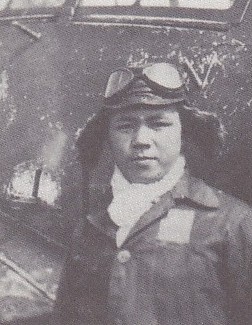
Tamotsu Hidaka (deceased)
At about 4 p.m., Vice Admiral Ugaki arrived at the airfield in a
black-painted car. Kawano was surprised, "Is the Commanding Officer himself
going to make a sortie?" He recalls, "The Commanding Officer looked at the 22
squadron members and said, 'There is no need for you to go in this way.
Observers, remain here.' However, all squadron members said to him, 'Please let
us go together.'"
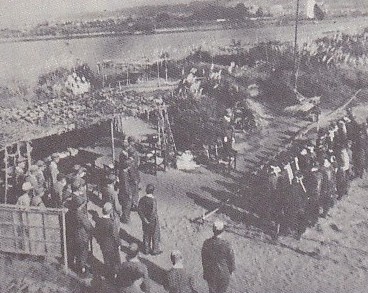
On August 15, 1945,
701st Air Group
members listened to
instructions from 5th Air
Fleet Commanding
Officer Ugaki who was
standing on a chair at Ōita Naval Air Base
(provided by Waichi Kawano)
"Everyone, you will go together with me? I am determined to not return
alive." Vice Admiral Ugaki's eyes appeared to be moist.
Vice Admiral Ugaki took off at 5 p.m. together with the observer in the
observer's seat of the lead plane piloted by Squadron Leader Lieutenant Tatsuo
Nakatsuru.
Kawano's Suisei, carrying an 800-kg bomb, took off 30 minutes later.
He proceeded south as a lone plane along the eastern coast of Kyūshū and reached
Okinawan skies, but he could not find the enemy fleet. He dumped his bomb,
and while returning to base he ran out of fuel and made a forced landing along
the coast within sight of Kagoshima Bay. Flight Petty Officer 1st Class Hidaka
died as a result of a heavy blow to his head during the landing.
The place where he made an emergency landing is not clear since it was at
night. However, on the next day on the 16th, the truck that carried Kawano and
the corpse of Flight Petty Officer 1st Class Hidaka arrived at Kagoshima Air
Base in Kagoshima City in about an hour.
The first time that Kawano realized that the war had ended was on the 19th
after Flight Petty Officer 1st Class Hidaka had been cremated in Kagoshima City
and then Kawano finally reached Ōita Base by train with some transfers.
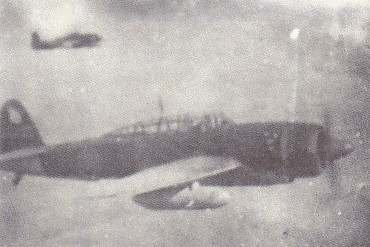
701st Air Group Suisei (Judy)
Model 43 Carrier Dive Bomber
(provided by Hisao Saitō)
From March to June 1945, Vice Admiral Ugaki, who was based at Kanoya, had
supreme command of aerial special attack operations. There is an entry dated
March 11, 1945, in his war diary entitled Sensōroku (Seaweed of War),
which he wrote from October 1941 to just before his special attack sortie. It
reads, "I also am determined to follow at some time after the young men in the
Special Attack Corps." This entry hints at the "Ugaki Special Attack."
However, since he decided on his own to make this special attack even though he
knew that the war had ended, it was not recognized as an official military
operation. There were many persons, including military veterans, who criticized
the attack since "he decided on the participation of his subordinates."
Kawano finished by saying, "Even if my older brother had known that the war
had ended, he probably would have made a sortie. It was an age when following a
superior's wishes was most important."
Related Web Pages
Translated by Bill Gordon
March 2026
HOME >
Stories > Not Knowing War Lost, Participated in Ugaki
Special Attack
|
|
